
To Serve with Love

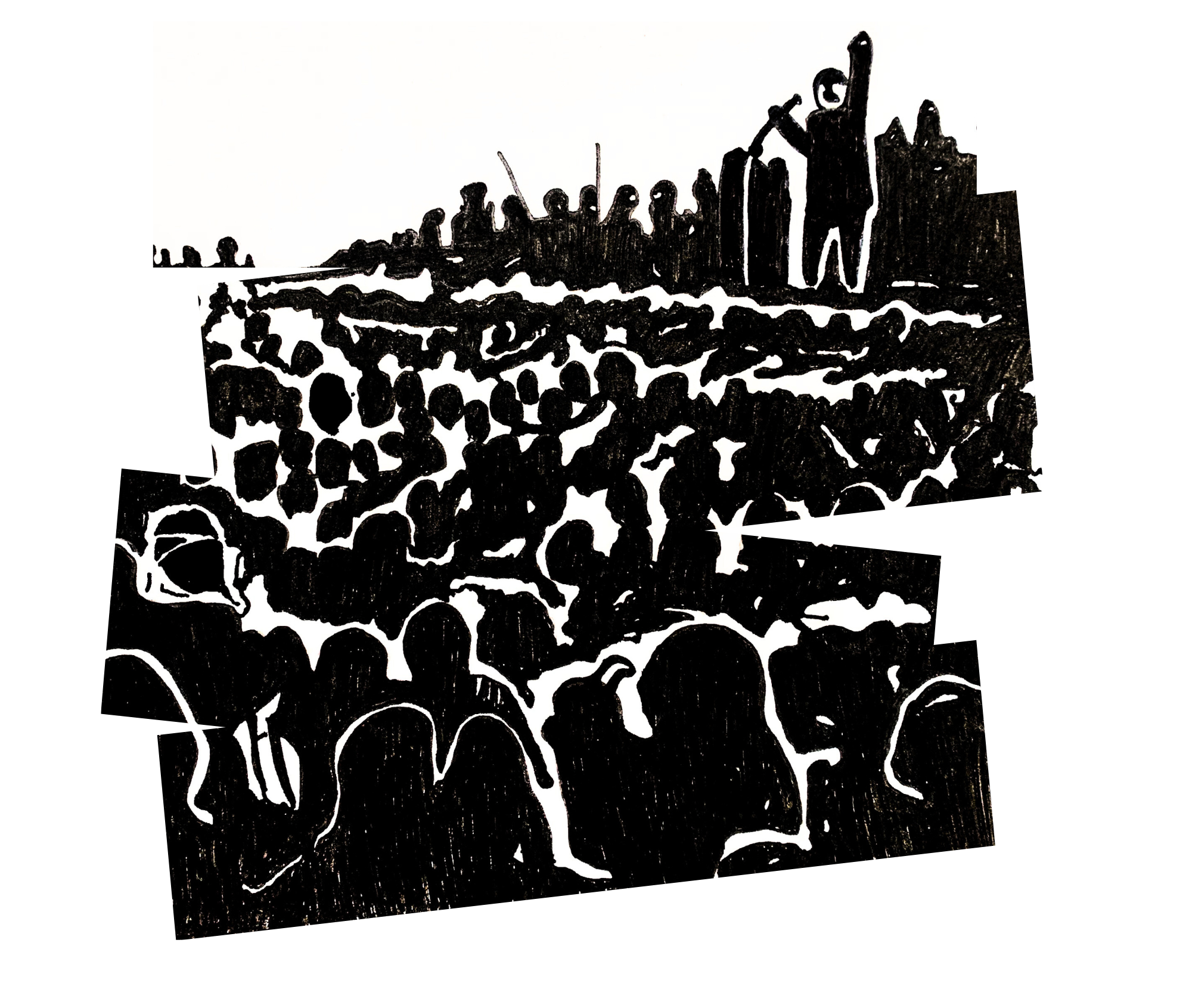
The role of a Principal in a school is a multifaceted one, and indispensable. Principals serve as the educational leaders, administrators, and moral compasses of their schools. Principals set the tone for the entire school by establishing a clear vision and mission. And serving as role models for both students and staff, one of their primary roles is that of an educational leader.
However, this traditional notion of a school Principal as the central figure around which everything revolves is being re-imagined at Prakriti. The conventional image of a school Principal, often portrayed as the central figure, is being rethought.
Alpha in captivity
In the leadership parlance the term "alpha" is frequently used to describe a leader positioned at the pinnacle of the hierarchy, commanding the subservience of the entire group. This concept, influenced by observations of captive wolf packs, lacks complexity and accuracy. In such scenarios, because adult wolves share no direct kinship, a single dominant figure emerges. This picture inaccurately portrays both the wolf hierarchy and the role other leaders should inhabit.
Contextual Leadership and Flexible Hierarchies
Wild wolf packs in contrast function as a family unit, with the breeding pair in charge simply because they are the parents that guide their pups. These breeding pairs (the alphas) are often responsible for reproduction and pup-rearing. However, the leadership extends beyond the alpha pair, as other pack members may assume leadership roles based on their strengths and experiences. Wolves with specific skills or physical attributes might take on different roles, such as chasing prey, cornering it, or delivering the final takedown.
Researchers have also found that wolf pack hierarchies are more flexible than previously thought. Rather than a rigid, linear hierarchy with a single dominant alpha, there are often overlapping roles and a more dynamic distribution of leadership responsibilities. Leadership roles are often situational and context-dependent. For example, a wolf that excels in hunting may lead during a hunt, but another wolf with strong social skills may mediate conflicts within the pack. Leadership can shift as situations and needs change. In the real world leadership is akin to the nurturing guidance of a maternal and a paternal figure in a family unit; similar dynamics are crucial in educational leadership. While certain authority is necessary, it's not an exclusive ingredient for leadership. The Principal should guide through expertise and wisdom rather than dominance. Situational leadership, based on the strength of the individual teacher or student, can be more conducive to a positive learning environment.
True and effective leadership doesn't merely rely on compliance through fear but inspires individuals to internalize values. While it's undeniable that fear or authority can compel individuals to comply with specific directives, true and effective leadership extends far beyond mere coercion. These leaders, like parent wolves, don't command through fear or authority, but guide through wisdom, expertise, and importantly through love. This was also the most important lesson I learnt during my coaching time with Principals of Govt Schools of Delhi. Leadership from within and leadership of the self is the only characteristic we can nurture for our being. It holds true as much for teachers (as leaders in the classrooms) as it does for organsational leaders.
Empowering leaders
In schools, as in life, true leaders are those who inspire and create an atmosphere where people willingly contribute with their best efforts. They are the ones who lead not through fear or authority, but through trust and respect. The traditional role of a Principal as the sole culture-defining figure is becoming outdated. This new approach to leadership, emphasizing collaboration, democracy, and shared responsibility, challenges the conventional top-down model prevalent in many educational institutions. Educational institutions and creative endeavors should adopt a more collaborative, inclusive, and democratic approach, ensuring that culture and creativity are shaped by a collective effort rather than one person's authority.
This vision to "To Serve with Love" underscores the noblest form of leadership. It reminds us that, in leadership, as in life, love, compassion and empathy are the most potent tools we have to inspire greatness. By embracing it, Principals and leaders can redefine their roles, promoting a culture of collaboration and trust, and leading by example. The days of the authoritarian Principal are evolving into an era of compassionate and inclusive leadership, where the entire school community plays a role in shaping its culture and success. This vision offers a path for educational institutions to ensure a future that is not dictated by one person's perception, but shaped by the collective wisdom and individual strengths of all its participants. By serving with love, we're not only redefining the role of Principals but also contributing to the evolution of education as a whole. In school, the endeavor is to let teachers become leaders and ultimately learners become leaders of their learning!
 |
|
I really enjoyed how connect was drawn between the organic leadership found within wild wolf packs and leadership we should inspire for (in this case principal) involving love, empathy, wisdom, collaboration and expertise. I could draw parallels between the functioning of a school and a family as institutes within a society. This reminds me of a book I am reading "Culture Code" and how familial bonds in a team or an organisation strengthens each individual. Contextual/situational leadership empowers and boosts each member of the team/family and would love to understand more of how we can attain this within teams, schools, families etc. More power to institutes/organisations aiming to achieve the same through healthy leadership.